












Tuesday was long. The meeting ran over, traffic was heavy and you got home not feeling like doing anything. But someone saved you the last pastry, and the phone call with your sister made you really laugh. That happened too.
A gratitude journal is a notebook where you regularly write down specific things you feel grateful for. The most common approach is to note three things at the end of the day, in just a few minutes. It's not about pretending everything went well, but about training your eye to notice what did, even on heavy days. It's one of the simplest ways to get started with journaling.
What is a gratitude journal for?
It helps you look at your day differently. People who keep one for a while tend to say the same thing: they start noticing things that used to slip by, they end the day with more than a to-do list and, when they reread, they find weeks that seemed gray full of good moments.
Those are the benefits you experience in practice: a pause at the end of the day, a record of what did happen and a habit of looking for the specific. It's not a cure for anything, and if you're going through something hard, the journal can keep you company, but it doesn't replace the support of a therapist.
How does it work?
The mechanics are simple:
- Choose a set time. Night usually works because the day is over and you have plenty to choose from.
- Write the date.
- Write down three things you're grateful for from that day.
- Next to each one, write why.
That last step is what makes the difference. “I'm grateful for my mom” becomes automatic very quickly. “I'm grateful my mom sent me a long voice note about her garden, because it made me feel close even though we're far apart” makes you go back to the moment.
Gratitude journal example: a filled page
This is what an ordinary night looks like, from start to finish:
Thursday, November 12
- My morning coffee came out just the way I like it, and I drank it without looking at my phone. Because it was 10 minutes just for me.
- A coworker covered for me in the meeting when I got stuck on the numbers. Because I didn't have to ask.
- I found parking on the first try, after a week of driving around. Because I made it on time to my daughter's class.
One person: Ana, for sending me the recipe I asked her for a month ago.
One line about the day: Tired, but going to bed in a good mood.
None of those things changes your life. That's the point. A gratitude journal doesn't wait for something big to happen: it focuses on what usually slips past you.
Gratitude journal template to copy or print
If you were looking for a printable gratitude journal PDF, this template does the same job: copy it onto the first page of your notebook and repeat it every night, or put it on a sheet and print it.
- Date: …
- I'm grateful for (1): … because …
- I'm grateful for (2): … because …
- I'm grateful for (3): … because …
- A person I'm grateful to for something: …
- Something small I almost missed: …
- One line about how I'm going to bed: …
If one day nothing comes to mind, use a question instead of the list: what was the most delicious thing you ate today? Who made your day a little easier? What problem today could have been worse?
What if I feel like I always write the same thing?
It happens, especially after a few weeks. Your family, your health, your job… you're truly grateful for them, but writing them every night ends up emptying them of meaning.
Three ways out of the repetition:
- One rule: nothing repeated in the same week. It forces you to look beyond the obvious.
- Change the scale. One day, write only small things (a smell, a song, a meal). Another day, one single big thing, with half a page to tell it.
- Thank someone specific. Instead of a list, write a paragraph addressed to one person. Sometimes it ends up becoming a message you actually send.
How often should I write, and what about bad days?
There's no rule. Some people write every night and some do it two or three times a week. If it's hard to keep up daily, try Sunday night and write three things from the whole week. And if you skip days, you pick up again with today's date.
Some days gratitude feels forced, and you don't have to make yourself do it. On those days you can first write what weighed on you, without a filter, and then look for one single thing that was okay. “Today was a horrible day. The only good thing was the freshly washed blanket.” That line is honest, and it's enough.
A notebook just for this
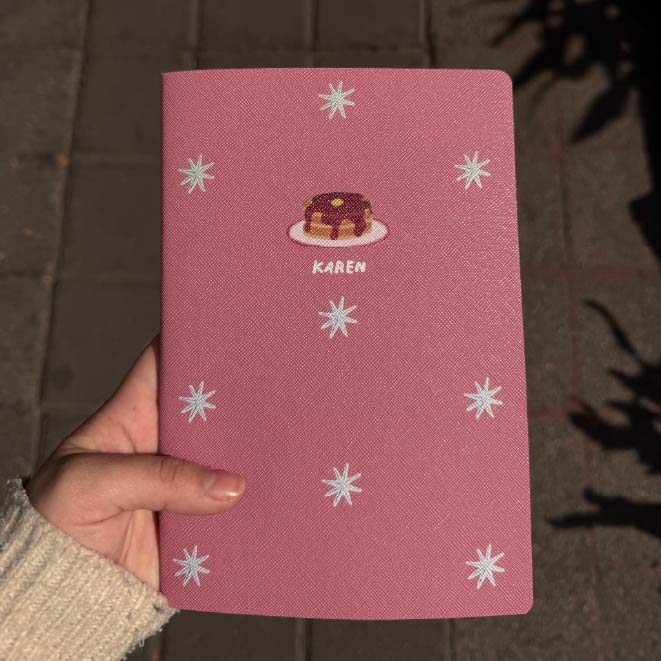
It helps for your gratitude journal to have its own notebook, separate from your planner or work notes. The Softcover Notebook has 100 pages: at one page per night, that's 100 nights of things that did happen. It's light and fits on your nightstand, next to the lamp, which is where it needs to be so you don't forget it. If you want more ideas for what to write, here's a guide to journaling prompts.
Frequently asked questions
What is a gratitude journal? It's a notebook where you regularly write down specific things you feel grateful for, usually three at the end of the day, with a line explaining why.
Does it work for kids? Yes, with a shorter version: just one thing a day, said out loud or drawn if they can't write yet. There are ideas for doing it together in family journaling.
Is a gratitude journal the same as a journal? It's a type of journal. Journaling is the general practice of writing for yourself; a gratitude journal focuses only on what you're grateful for.
Leave a comment
This site is protected by hCaptcha and the hCaptcha Privacy Policy and Terms of Service apply.