











It's Sunday afternoon. On the dining table there are two open notebooks, a box of colored pencils and a glass of water nobody has touched. Your daughter draws a dog with six legs and underneath writes "today we went to the park." You write in yours, next to her. Nobody says much, and that's fine.
Journaling for kids means writing or drawing in a notebook what they live, think and feel, in their own way and at their own pace. As a family it works best when it isn't homework: everyone has their own notebook, you sit together for a while and write at the same time. The adults don't correct, they keep them company. That's enough to get started.
Why write with your kids instead of just asking them to write?
Because kids do what they see. If the notebook is something you use too, it stops being a school exercise and becomes a part of home life.
Writing together also opens up another way of talking. There are things a child won't tell you in the car, but will draw. And there are days when "how was your day?" only gets you a "fine," while "draw the weirdest thing that happened today" gets you a whole story.
It's not about writing neatly or without mistakes. It's about having a space that's theirs.
How to start a family journal
You don't need a system. You need three things:
- One notebook per person. Sharing one can work later, but at first everyone wants their own. Letting them choose it helps a lot.
- A set, short moment. Between 10 and 15 minutes, after dinner, on Sunday morning or before bed. Keep it roughly the same each time.
- One question for everyone. The same one for grown-ups and kids. Each person answers however they can: with words, with drawings or with both.
When you're done, anyone who wants to can show their page. Anyone who doesn't, doesn't. That rule matters more than it seems: if the notebook gets checked, it stops being a safe place.
Writing questions by age
For kids who don't write yet (or only a little)
Here the notebook is for drawing, and underneath you write what they dictate, in their exact words.
- What was the most fun thing today?
- Draw someone who made you laugh.
- What color was your day?
- If you were an animal today, which one would you be?
For kids who already write
- What did you learn today that you didn't know yesterday?
- Write three things you like about your home.
- What scared you this week and what did you do?
- Make up a different ending for something that happened today.
For teenagers
With them, fewer questions and more space. They often prefer a notebook of their own that nobody reads, and it's worth respecting that.
- What would I like my parents to know about me that I haven't told them?
- What song describes my week and why?
- What would I do if I knew nobody would judge me?
Ideas so it doesn't turn into homework
The risk with any family habit is that it starts to feel mandatory. A few ways to avoid that:
- Write too, for real. Don't pretend to write while you keep an eye on them. Answer your question.
- Don't correct spelling in the notebook. School already does that. Here what matters is what they meant to say.
- Let them skip days. If one Sunday nobody feels like it, that's okay. Pick it back up the next one.
- Mix formats. One day you write, another you tape in a movie ticket, another you make a list of the month's favorites: food, game, song.
- Keep the notebooks together. On a shelf or in a family box. Seeing them there is a reminder that they exist.
A notebook for each person
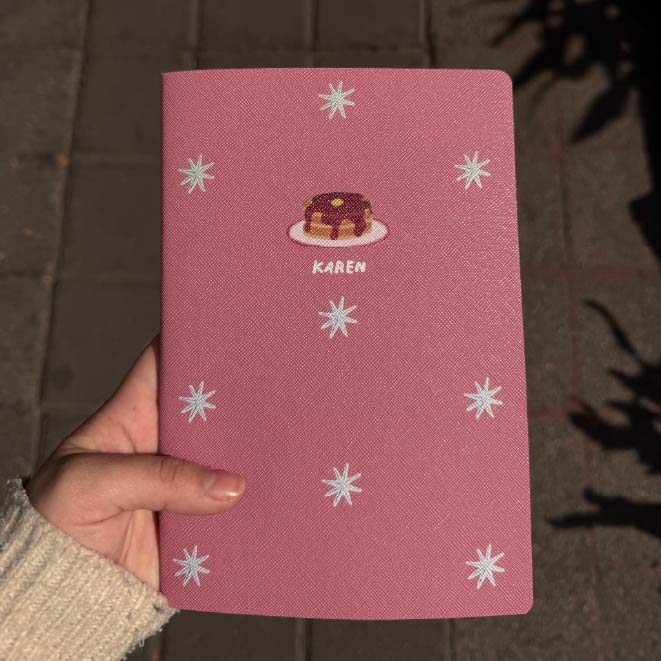
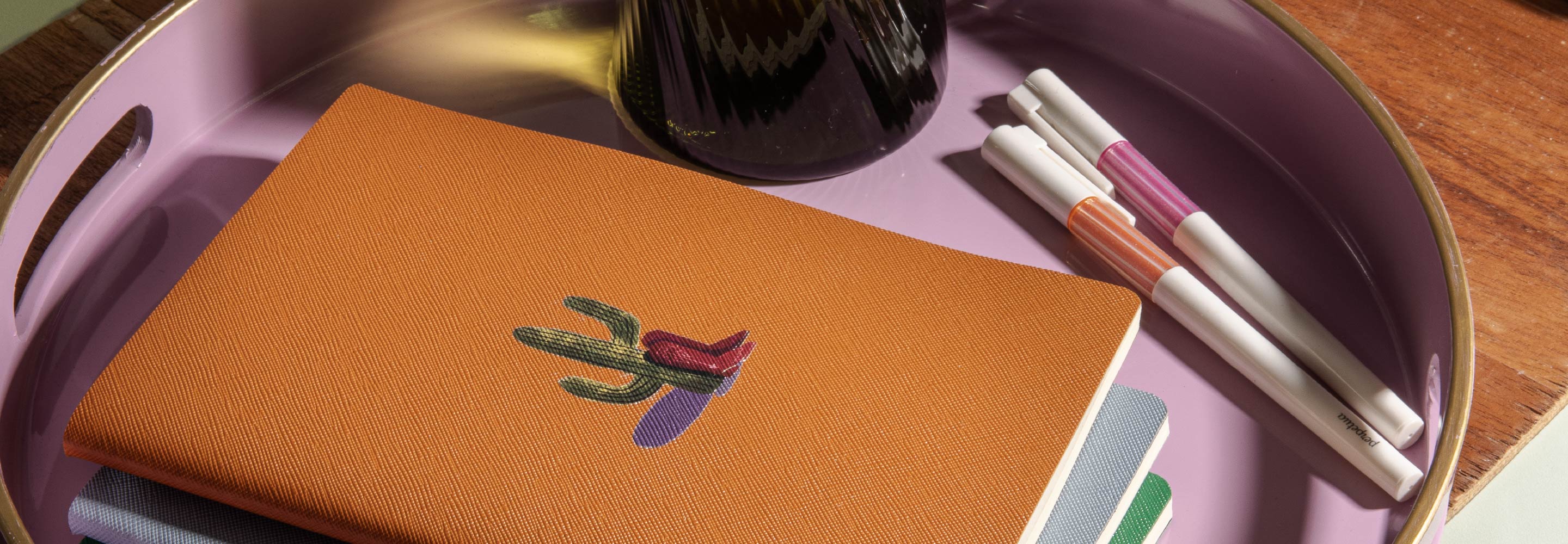
A notebook with their name on it feels different, and it also ends the fights over whose is whose. The Libreta Pasta Suave is light, has rounded corners and 100 pages of 90 g ivory bond paper, blank or lined. Each child's name can be engraved on the cover, with a preview before you pay, so you can choose them together.
If you want more ideas for your own writing, here's a guide to what journaling is and how to start.
And if there's a baby on the way, here's how to keep a pregnancy journal.
What stays
A few years from now, those notebooks will be something else. The wobbly handwriting, the six-legged dog, the question they answered with a single word. What today looks like a little while at the dining table ends up being a record of what your family was like, told by each of you.
If you start, we'd love to hear how it goes. Share your experience with The Journaling Club community on Instagram (without showing anything your kids don't want seen).
Frequently asked questions
At what age can kids start journaling? As soon as they can hold a crayon. Before they can write, the journal is for drawings and you write down what they tell you. As they grow, words take up more and more space.
Should I read my kids' journal? Only if they show it to you. Reading it without permission breaks their trust and makes them stop writing honestly. Whatever they want to share, they'll share.
What do I do if my child doesn't want to write? Don't force them. Let them draw, tape things in or just watch you write. Sometimes interest comes on its own once the notebook stops being an obligation.
Leave a comment
This site is protected by hCaptcha and the hCaptcha Privacy Policy and Terms of Service apply.