












Sunday afternoon. Your planner is open, there's a cup of coffee next to it and your phone is face down. There are three birthdays this week, a dentist appointment you almost forgot and a project that's been on “I'll do it tomorrow” for two weeks.
To organize a personal planner, split it into three levels: a monthly view for fixed dates, a weekly view to plan what you're actually going to do, and a daily space for to-dos and notes. Add a few sections at the front that you check often (birthdays, goals, contacts) and set aside a fixed moment each week to plan. A planner works when you open it daily and review it once a week, not when it's perfect.
Step 1: set up the sections at the front
Before filling in days, save a few pages for what you'll look up all year. No more than five, so it doesn't turn into a filing cabinet:
- Birthdays and important dates, organized by month.
- Goals for the year or the season, on a single page.
- Contacts you don't have in your phone: the doctor, the plumber, the school.
- Undated ideas and to-dos, the things you want to do “someday”. Here are some list ideas for your notebook.
- Passwords: no, never. That section doesn't belong on paper.
If you want to add a page for your habits, here's how to make a habit tracker in your notebook.
Step 2: plan the month
At the start of each month, open a page to see it all. Only things with a fixed date go there:
- Appointments and commitments.
- Payments and due dates.
- Birthdays and events.
- A couple of goals for the month, no more than three.
This page isn't for to-dos. It's so you can see at a glance what the month looks like. If you want to go further, here's how to do your monthly planning with a Sunday routine and how to plan your year in a planner.
Step 3: plan the week
This is where the planner becomes truly useful. Once a week, always on the same day, do this:
- Review the week that just ended: what was left undone.
- Move whatever still matters to the new week. What no longer matters, cross it off without guilt.
- Copy this week's appointments and dates from the month.
- Choose three priorities. Not ten. Three.
- Spread the to-dos across the days, leaving room for the unexpected.
A trick so the review doesn't get skipped: put it in your planner as if it were an appointment with yourself. Same day, same time, same place. With a coffee, without your phone at hand.
It's 15 or 20 minutes that save you the feeling of running after your own planner.
Step 4: use the daily space
Each day, open the planner once in the morning and once at night. What you write down:
- The day's to-dos, with a mark for what you've done.
- Loose notes: a fact, a number, an idea.
- One line about the day, if you like. Over time it becomes a record of your year.
A simple system of symbols helps you read the page quickly: a dot for a to-do, a cross for done, an arrow for what moves to another day. If you like this way of organizing yourself, the Bullet Journal method explains it in full.
And so your planner gets opened every day, give it a fixed spot. A planner that stays in a drawer organizes nothing. Three habits that help:
- Always in the same place: your desk, your bag, your nightstand.
- Always with its pen, so there's no excuse.
- Always in sight, open to the current week if you can.
What to do if you drop your planner
It happens. Three weeks without opening it and then it's awkward to go back. What works:
- Don't fill in what you missed. Start on this week.
- Do a short review: what's really still pending.
- Lower the bar. Once a day, one line. That's already getting organized.
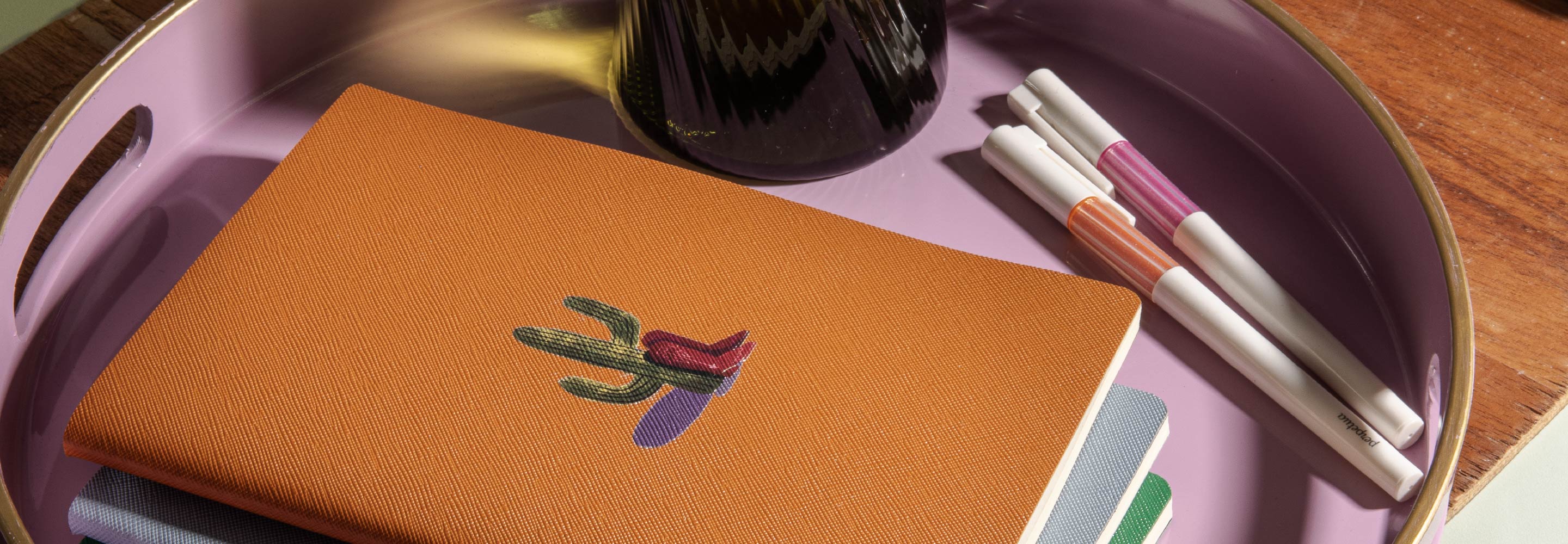
This is where an undated planner helps: if you stop using it, there are no blank weeks holding anything against you. Perpetua's Agenda Atemporal has 160 undated pages, designed for one year, measures 12.8 × 18 cm and lies flat. You write the days yourself, so you pick it up right where you left off.
Common mistakes
- Trying to use every section from day one. Start with the month and the week; add the rest when you need it.
- Writing everything down as a to-do. If everything is urgent, nothing is. For work, here's how to organize your work to-dos in a notebook.
- Decorating more than you plan. If decorating eats into your planning time, simplify.
- Having three planners. One for everything works better than three half-used ones. Not sure? Here we help you choose between a planner or a notebook.
Frequently asked questions
How do you organize a personal planner? In three levels: the month for fixed dates, the week to plan priorities and the day for to-dos and notes. Plus a few sections at the front for what you look up all year.
What sections should a personal planner have? The ones you'll actually use. The most useful are birthdays, goals, contacts and undated ideas. Five or fewer is enough.
How often should you review your planner? Daily to check your to-dos, and once a week to plan the next one. That weekly review is what makes the planner work.

Leave a comment
This site is protected by hCaptcha and the hCaptcha Privacy Policy and Terms of Service apply.