











The first of the month. You have your notebook open, a ruler, a pencil and a mental list of everything you want to start: drinking more water, reading before bed, walking, leaving your phone outside the bedroom. All at once.
A habit tracker is a page in your notebook where you record, day by day, whether you kept up the habits you want to build. The most common version is a grid: habits in the rows, days of the month in the columns, and a mark in each square you completed. It takes 15 minutes with a ruler and a pen, and at the end of the month it shows you clearly which habits are sticking and which aren't. Here's how to set it up step by step.
Step 1: choose just a few habits
This is the most important part, and the one almost all of us skip. Start with three to five habits, no more.
To choose them:
- Make them specific. “Read” is vague. “Read 10 pages” can be checked off.
- Make them doable on a normal day, not just a good one. If you only manage a habit when everything goes right, the tracker will fill up with empty squares.
- Make them matter to you. Not the ones you've been told you should have. Those are the first to go.
Some examples that work: drinking eight glasses of water, walking for 20 minutes, writing three lines in your journal, going to bed before 11, not looking at your phone for the first half hour of the day.
Step 2: draw the grid
The most common format is a horizontal table:
- Write the name of the month at the top of the page.
- In the left column, write your habits, one per row. Leave about 4 cm of width for the names.
- To the right, draw one column for each day of the month, from 1 to 30 or 31. Number the days in the top row.
- Go over it in pen once you like how it looks in pencil.
If your notebook is lined, the lines already give you the rows: in a notebook with 0.8 cm line spacing, each habit fits on its own line and you only draw the columns. If it's plain, you're free to make the squares any size you want.
On a single page, 31 comfortable columns may not fit. One solution is to use two facing pages: the left one for days 1 to 15 and the right one for the rest.
Step 3: decide how you'll mark it
The simplest way is to fill in the square or add a checkmark. But there are other options:
- Colors. One color per habit. By the end of the month, the page looks like a chart.
- Half a square. If you only partly did it —you walked 10 minutes instead of 20—, fill in just half. It still counts, and it's more honest than leaving it empty.
- An X for days it didn't apply. If you were traveling or sick, mark it differently. Not doing something isn't the same as not being able to.
Other habit tracker formats
The grid isn't the only option. If it bores you or doesn't work for you, try:
- Weekly tracker. Seven columns instead of 31. It fits on your weekly page and feels lighter.
- Circular tracker. A circle divided into 30 or 31 slices, with one ring per habit. It takes longer to draw, but for some people the shape makes them want to fill it in.
- One habit per page. For something that really matters to you, a whole page with 30 large boxes and room for notes each day.
- Simple counter. Just the habit and a tally mark each time you did it. No dates. It works for habits that aren't daily, like going to the gym three times a week.
What do I do when I miss several days?
You're going to miss days. Every tracker has gaps, and it's fine for them to show.
What's not worth it is abandoning the tracker because it's already “ruined.” A month with 18 out of 30 squares filled is a month in which you did something 18 times. That's information, not a failure.
When the month ends, spend five minutes reading the page:
- Which habit filled up on its own? Maybe it's already established and doesn't need to be on next month's list.
- Which one stayed almost empty? Ask yourself whether it's too big, whether it's not the right time or whether you really want it.
- Are there days of the week that always fail? Mondays, Fridays… Sometimes the problem isn't the habit, it's the day.
With that, you set up next month's tracker. You drop one, adjust another, add a new one if there's room.
The notebook for your trackers
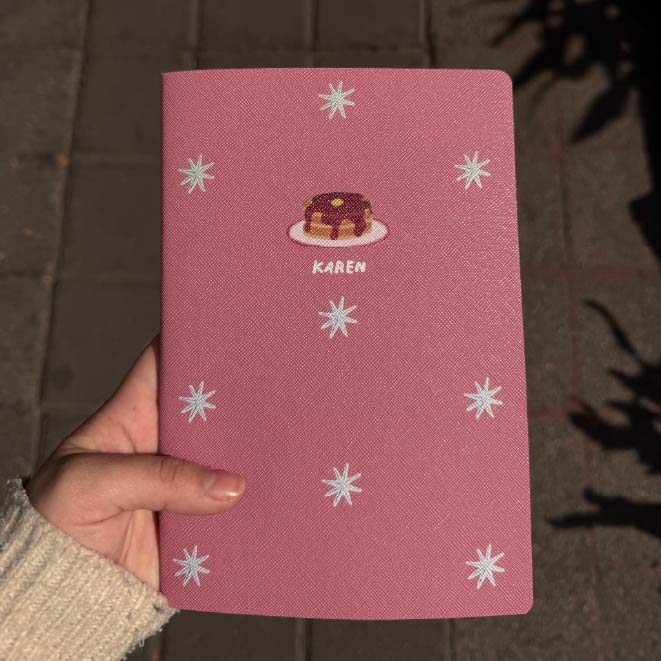
A habit tracker lives well in the same notebook where you plan or write, so you see it every day. The Hardcover Notebook lies completely flat, so you can use two facing pages for the whole month without the spine swallowing the days in the middle. It comes plain or lined, depending on how you prefer to draw. If you want to combine the tracker with other planning pages, here we explain the bullet journal method. And if you're looking for more pages like this, here are bullet journal ideas and a guide to organizing a personal planner.
Frequently asked questions
What is a habit tracker? It's a page where you record day by day whether you kept up certain habits. The most common version is a grid with habits in rows and the days of the month in columns.
How many habits should I put in my tracker? Between three and five to start. With more, the tracker becomes a to-do list and it's easy to abandon it before the month is over.
Is it better to make a habit tracker on paper or in an app? Apps send you reminders; paper makes you open your notebook and see the whole month at a glance. Many people prefer paper because marking it by hand feels like a small way of closing the day.
Leave a comment
This site is protected by hCaptcha and the hCaptcha Privacy Policy and Terms of Service apply.