




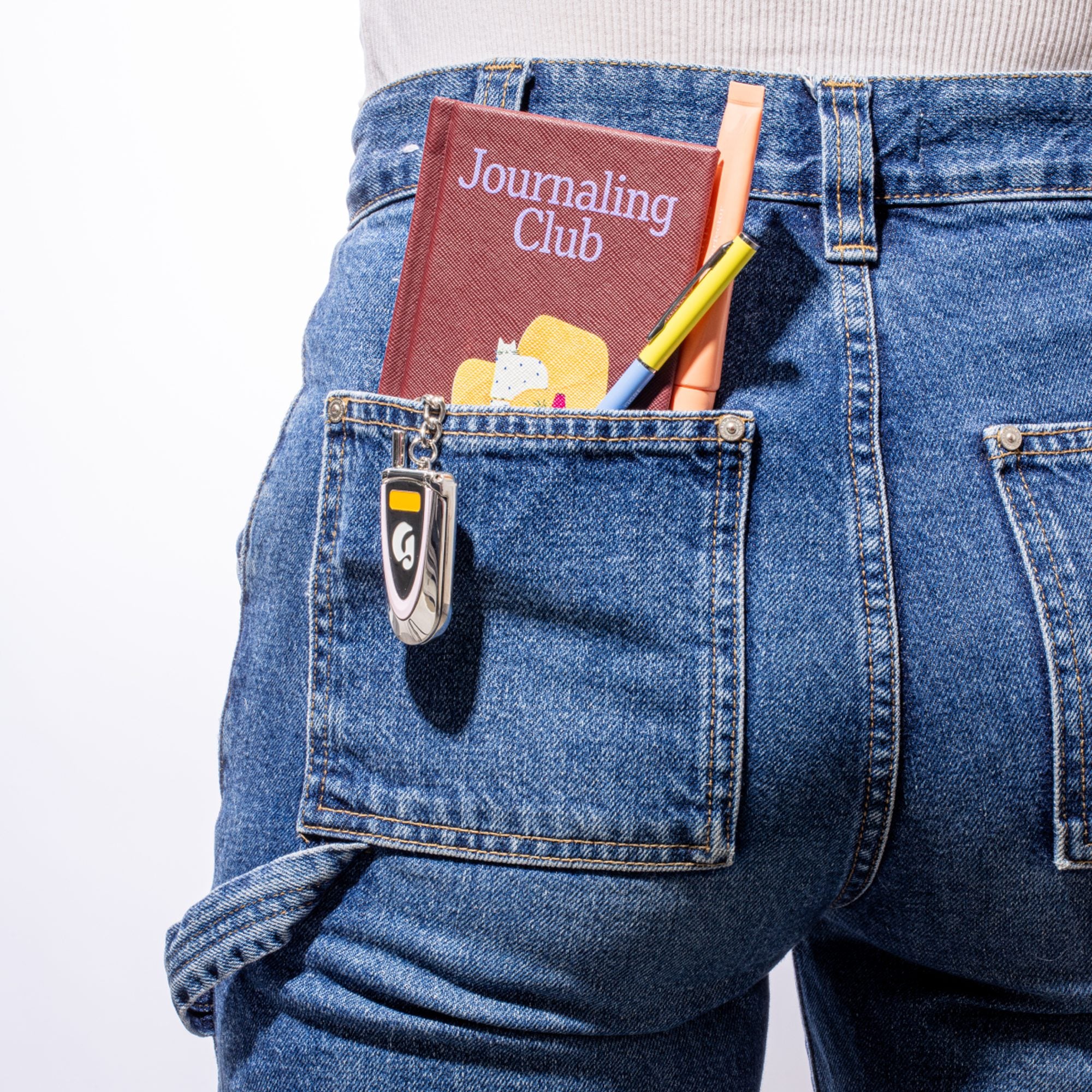
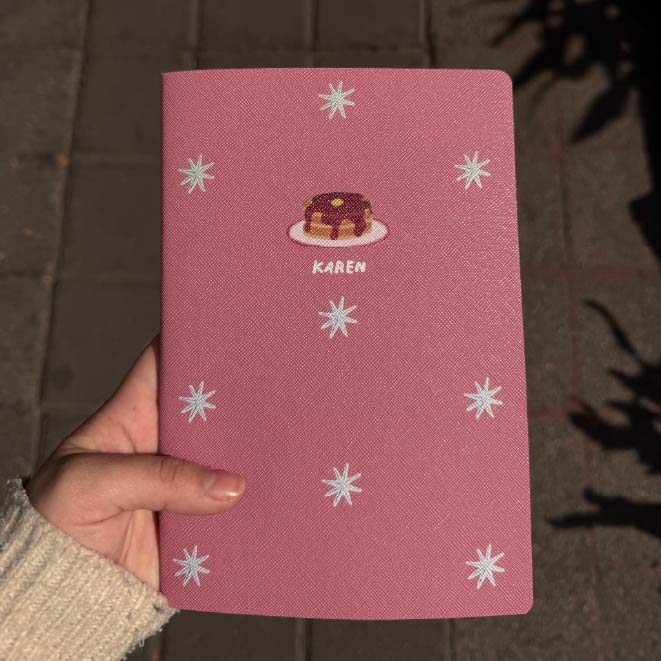


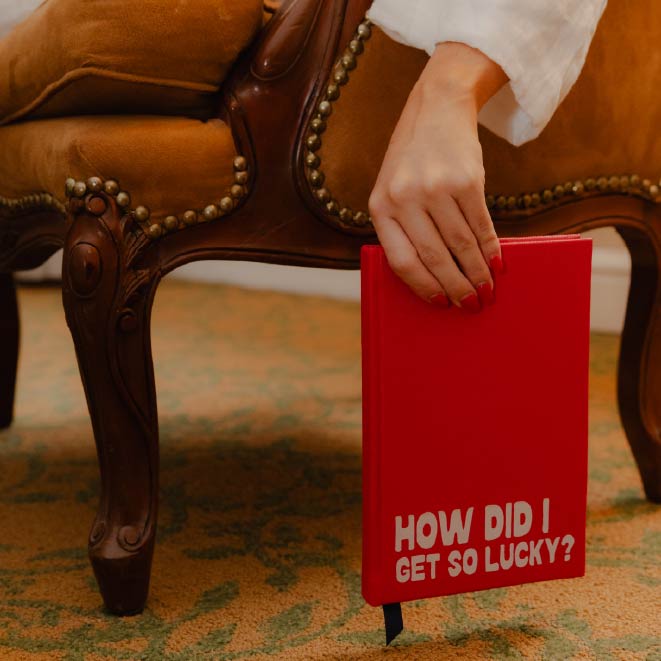

On the table there's a movie ticket, a coffee label, a pair of scissors and a glue stick. The notebook is open to a spread that doesn't say anything yet. In an hour it will tell the story of your Saturday, without you writing more than three lines.
Creative journaling is keeping a journal where words live alongside images: collage, stickers, drawings, colors and cutouts. It helps you record your day, process what you feel or simply play, and you don't need to know how to draw. There's only one rule: the page is yours and it doesn't have to look pretty to count.
What creative journaling is and what it's for
If you already know what journaling is, creative journaling is its visual version. Instead of filling lines, you build pages with whatever you have at hand and let the image say what sometimes won't come out in words.
It works really well in three moments:
- When you don't feel like writing. Gluing and cutting keeps your hands busy and lets your mind rest.
- When you want to keep a memory. A ticket, a napkin or a printed photo say more than a paragraph.
- When something is hard to explain. A color, a shape or a doodle can say how you feel before a sentence can.
Basic supplies (you probably have most of them)
You don't need to buy a complete kit to start. Check your drawers:
- Scissors and a glue stick (liquid glue tends to wrinkle the paper).
- Magazines, brochures, wrappers, tickets, clothing or food labels.
- Pens, markers and colored pencils.
- Washi tape or any tape you have.
- Stickers, if you have them. They help a lot when you don't know where to start a page.
A practical tip: keep a box or an envelope where you toss cutouts during the week. When you sit down to journal, you'll already have material.
Page ideas to get started
If the blank page freezes you, start with a structure. Here are some that work:
Collage of the day. Glue down three things you found today and write one line under each. That's it.
Mood page. Pick a color that represents how you feel and fill a box with it. Next to it, write three words.
Map of a place. Draw, even with simple lines, the café or park where you were. Mark where you sat and what you ordered.
Illustrated list. Make a list of things you liked this week and add a tiny drawing to each one. A circle with little lines is already a sun.
Inspiration page. Cut out magazine images that catch your eye, even if you don't know why. Glue them together and, a week later, write what they have in common.
Monthly spread. At the end of each month, gather the tickets, receipts and notes you saved and arrange them in a single view. It's a summary you can understand at a glance.
If you can't draw
Almost no one who does creative journaling “knows how to draw.” What they do is draw anyway. Some ways to take the pressure off:
- Draw with basic shapes. Circles, lines, squares and dots are enough for almost anything.
- Trace. Place an image under a thin sheet or against the window and follow the outline.
- Draw objects, not people. Your mug, your keys, a plant. They're easier and tell your day just the same.
- Set a time limit. Five minutes per drawing. That way there's no room to over-correct.
And if you don't like a page, don't tear it out. Glue something on top, paint over it or leave it as it is. Ugly pages are part of the record too (and they're usually the ones that make you laugh later).
Which notebook to use for creative journaling
For gluing, cutting and drawing, it helps to have a notebook that can handle use and stays open on its own while you work. A notebook with blank pages gives you freedom to arrange images without lines getting in the way.
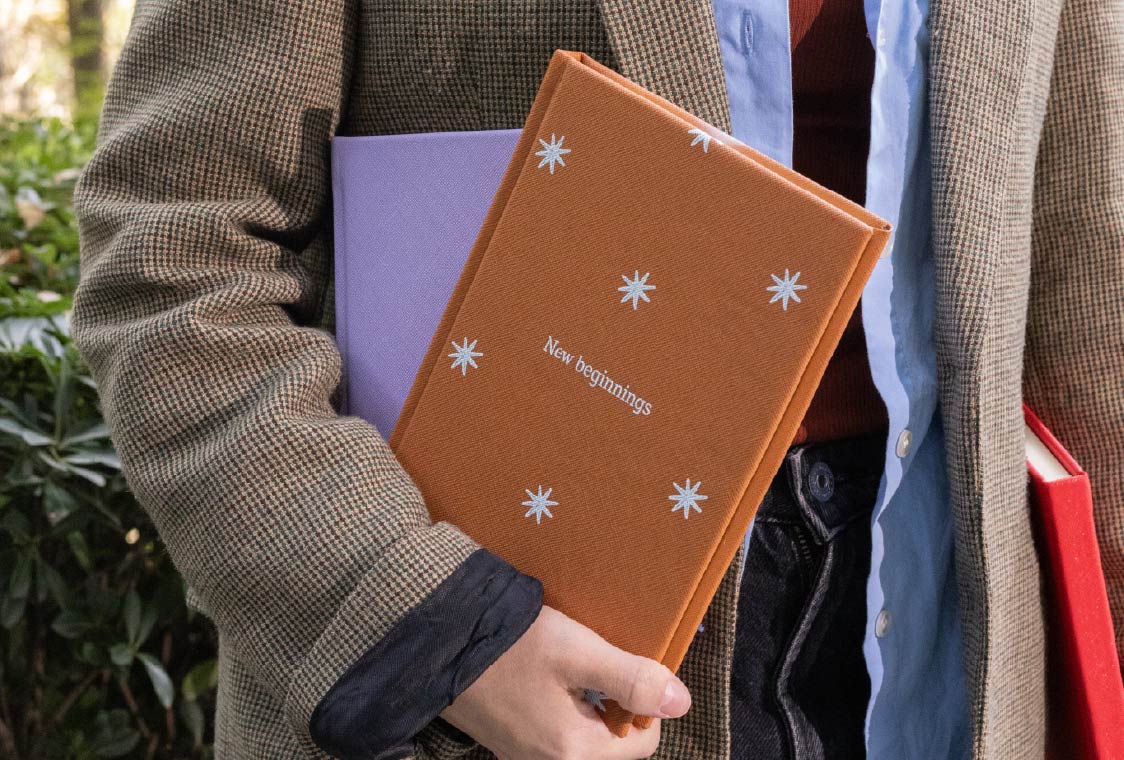
The Hardcover Notebook lends itself to this: 192 pages of 90 g cream bond paper, a sewn binding that lays flat and the option of blank pages. Since it lays flat, you can work on a spread without holding the pages down with one hand. And because collage makes a notebook get thicker over time, a rigid cover helps it stay firm.
If you like stickers, use them freely: they break up a blank page in seconds. And if you don't have any, any cutout lying around the house works just as well.
If you want more, here are ideas to decorate your notebook and bullet journal page ideas. And if you like gluing paper, try a junk journal.
Make it a habit, not a masterpiece
Creative journaling is more enjoyable when it stops being a project and becomes a pause. You don't need a free afternoon: 15 minutes at the dining table is enough for a page.
You can set aside a fixed moment, like Sunday afternoon, or do it whenever you've gathered enough material. It's not a competition with what you see on social media. It's a space to play, to keep things and to look at your life with new eyes.
Frequently asked questions
What do I need to start a creative journal?
A notebook, scissors, a glue stick and something to write with. Everything else (magazines, tickets, stickers, colors) builds up over time and is almost always already in your home.
Is a blank or ruled notebook better for creative journaling?
For collage and drawing, blank usually works better, because there are no lines in the way when you arrange images. If you combine a lot of text with images, ruled pages work too.
Do my pages have to be pretty?
No. Creative journaling is for you, not for showing off. A messy page that helped you let go of the day is worth just as much as one that looks like it came out of a magazine.
Leave a comment
This site is protected by hCaptcha and the hCaptcha Privacy Policy and Terms of Service apply.