













Someone made a comment, meaning no harm, and it bothered you more than usual. Later that night, with the bedside lamp on, you're still thinking about it. Not about what they said, but about why it hit you so hard.
Shadow work journaling is writing about those reactions and the parts of yourself you usually avoid looking at: anger, envy, fears or needs you learned to hide. It isn't about judging or fixing yourself, but about getting to know yourself better. You do it with gentle questions, little by little and at your own pace, in a notebook only you read.
What shadow work is, in simple words
The idea of “the shadow” comes from Carl Jung's psychology and refers to the parts of our personality we keep out of sight. They aren't bad parts: they're the ones we learned, at some point, were not welcome. The anger we couldn't show, the sadness that “had no reason,” the wish for something that seemed selfish.
In journaling, shadow work takes a very practical form. You choose a question, write whatever comes out without correcting it, and then read it with curiosity, as if it were the page of someone you want to understand.
Before you start: take care of yourself
This kind of writing can stir things up. That's why it's worth doing with a few clear rules:
- Pick a good moment. Not right before bed if you know you have trouble letting go, and not in the middle of a heavy day.
- Set a time limit. 10 or 15 minutes is enough. You can stop sooner.
- Have a closing. When you finish, write a kind line to yourself or something you're grateful for today.
- Respect your pace. If a question feels like too much, skip it. That's okay.
And something important: journaling supports you, it doesn't replace therapy. If difficult memories, very painful wounds or thoughts that scare you come up while you write, reaching out to a mental health professional is the next step, and it's a brave one.
Gentle prompts to begin
These prompts are meant to open the door, not to knock it down. Choose one per session.
About your reactions
- What bothered me this week more than I expected? What do I think it touched in me?
- What behavior in other people really irritates me? Do I recognize it in myself, even a little?
- When was the last time I said “I'm fine” and it wasn't true?
About what you learned to hide
- What emotion was hard for me to show when I was a little girl?
- What phrase did I often hear at home that I still repeat to myself?
- What part of myself do I hide when I meet someone new?
About what you need
- What do I need but feel embarrassed to ask for?
- In which situations do I say yes when I want to say no?
- What do I envy in someone close to me? What does that envy tell me about what I want?
To close gently
- What part of me did I discover today that deserves more patience?
- If I spoke to that version of me the way I speak to a friend, what would I say?
If you'd like more ideas for writing with questions, here we explain what journaling prompts are and how to use them.
How to read what you wrote
Writing is half the exercise. The other half is reading it again, but with different eyes. A few days later, go back to the page and look for patterns: words that repeat, situations that show up again and again, an emotion that always arrives disguised as another.
You don't have to draw big conclusions. Sometimes it's enough to notice something like “whenever I feel ignored, I get angry.” That sentence alone is already clarity. It's not about changing anything today, it's about understanding yourself a little more.
A notebook that's yours alone
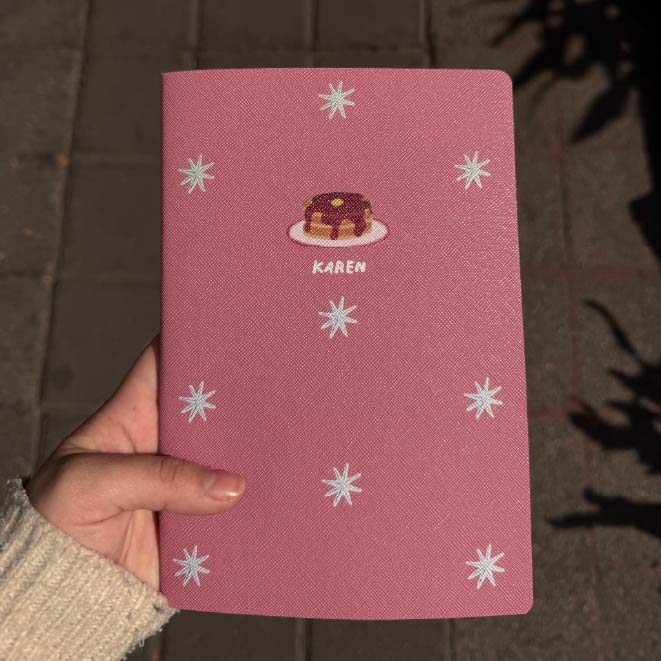
For this kind of writing, it helps to have a separate notebook, not your to-do list or your work notebook. Something you can keep in a drawer that no one else opens. A Softcover Notebook works well: it has 100 pages, it's light and fits anywhere, so it doesn't feel like a huge commitment. It's a small space for something that needs privacy.
Some people prefer blank pages so they can write without lines boxing them in; others like ruled pages so their hand doesn't wander. Both work. What matters is that when you open it, you know you can be honest there.
You don't have to do it every day
Shadow work isn't a daily habit like writing down what you're grateful for. It works best once or twice a week, or when something moved you and you want to understand it. Between sessions, let what you wrote rest.
There will be days when the page comes out light and days when it comes out heavy. Both count. Getting to know yourself isn't a project with a deadline, it's a process that writes itself... page by page.
Frequently asked questions
Is shadow work journaling dangerous?
It isn't dangerous, but it can stir up strong emotions. That's why it's best done with time limits, gentle prompts and a kind closing. If something comes up that overwhelms you, seek professional support.
How often should I do shadow work?
Once or twice a week is a good pace to start. You don't need to do it daily; the days in between help what you wrote settle.
Do I need a special notebook for shadow work?
Not special, but separate. Having a notebook just for this gives you privacy and helps you find your patterns when you read it again.

Leave a comment
This site is protected by hCaptcha and the hCaptcha Privacy Policy and Terms of Service apply.