









It's two in the morning. You've checked your phone three times, gone over tomorrow's meeting, last week's conversation and something you said five years ago. Your mind won't stop, and your body can't rest either.
Journaling for anxiety means getting onto paper what your mind keeps repeating, so you can look at it head-on instead of carrying it around in circles. It doesn't make anxiety disappear, but many people find that writing helps them sort out what they feel, tell what's urgent from what's just noise, and turn the volume down a little. Below are four simple exercises for those moments.
First, something important: journaling can support you, but it doesn't replace therapy. If anxiety often keeps you from sleeping, stops you from working or studying, or makes you feel you can't cope with your day, reach out to a mental health professional. Writing can be part of that path, not the whole path.
Why can writing help when there's anxiety?
An anxious thought is usually circular: it comes back again and again with the same words. In your head it seems huge, because it has no edges. On paper it has a beginning and an end, it takes up three lines and it can be read.
Writing also makes you slow down. Your hand can't keep up with the speed of your thoughts, and in that gap a little space appears. It's not about solving anything in that moment: it's about moving what you're carrying from one place to another.
This isn't a formula. It's a practice, and it works differently for everyone. That's why it's worth trying several exercises and keeping the one that helps.
Four exercises for when your mind won't stop
1. Empty your head
Set a timer for 10 minutes and write everything that goes through your mind, in no order, without punctuation if you prefer, without rereading. To-dos, fears, loose phrases, what your boss said, what you need to buy at the supermarket. It's not about writing well. It's about getting it out.
When the timer goes off, close the notebook. You don't have to read it.
2. What depends on me
Divide the page into two columns. On the left, write what's worrying you. On the right, next to each item, note whether it depends on you, partly depends on you or doesn't depend on you.
For what does depend on you, write a small, concrete step: send an email, make a call, ask a question. For what doesn't, write just that: “this doesn't depend on me.” Seeing it written down doesn't solve it, but it helps you stop trying to control it at two in the morning.
3. Land in the present
When anxiety pulls you into the future, this exercise brings you back to the room you're in. Write:
- Five things you see.
- Four things you can touch.
- Three things you hear.
- Two things you smell.
- One thing you know is okay right now.
It's simple on purpose. When your head is very full, complicated instructions get in the way.
4. The letter to a friend
Write what's worrying you as if a friend were telling it to you. Then answer her. We're almost always kinder and clearer with others than with ourselves, and this exercise puts that kindness to work for you.
When is a good time to write?
Two moments tend to work:
- In the moment. When you feel your mind speeding up, opening your notebook and writing even three lines can help break the cycle. That's why it helps to keep your notebook handy.
- Before bed. If anxiety shows up at night, writing down what's worrying you for a few minutes before turning off the light gives you permission to leave it in the notebook until tomorrow.
You don't have to write every day for it to help. Some people only use it during hard weeks, and that's fine.
What's best to avoid
- Turning it into another demand. If you feel guilty about not writing, it's no longer helping you. Journaling isn't one more chore.
- Rereading what you wrote at your worst moment. If a page weighs on you, you don't have to go back to it. Some people tear out the sheet and throw it away, and that's letting go too.
- Using the notebook to replace conversations. Writing helps you sort things out, but sometimes what you need is to talk to someone you trust or to a professional.
A notebook that fits with you
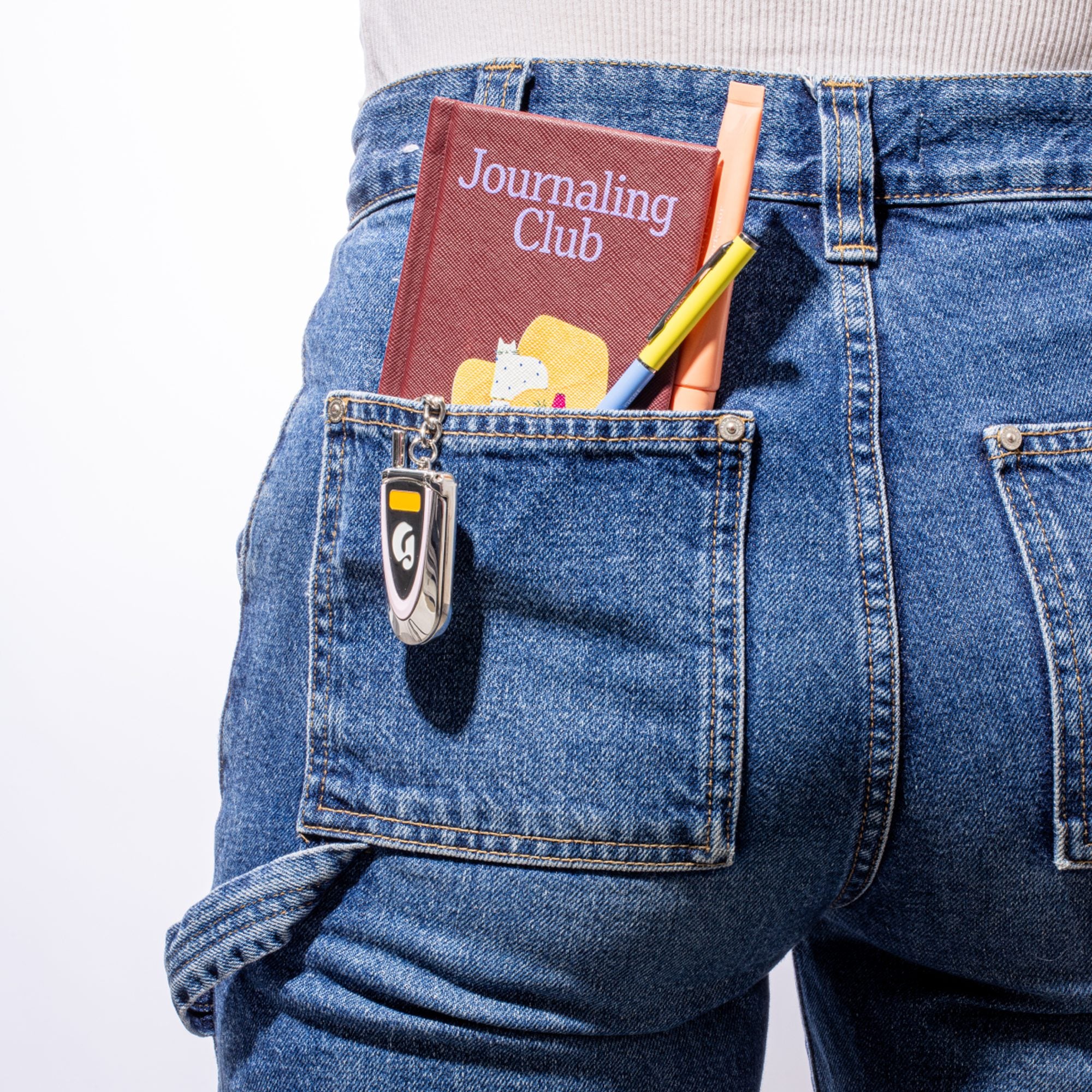
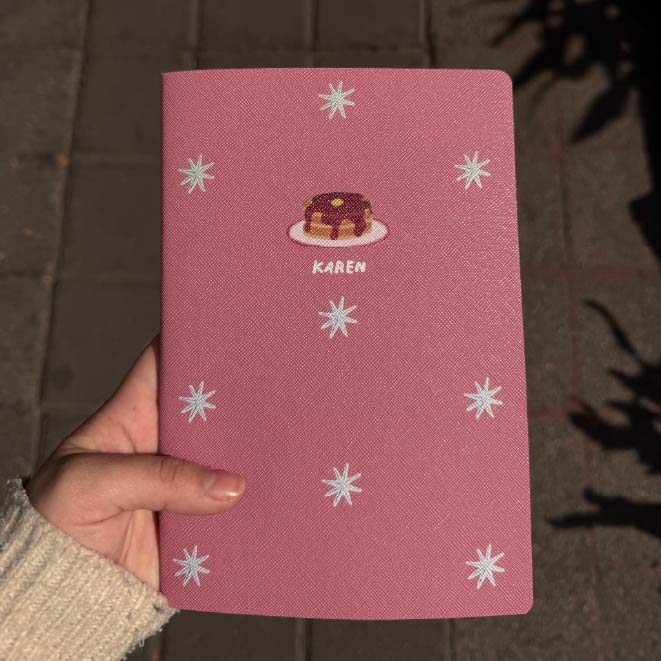
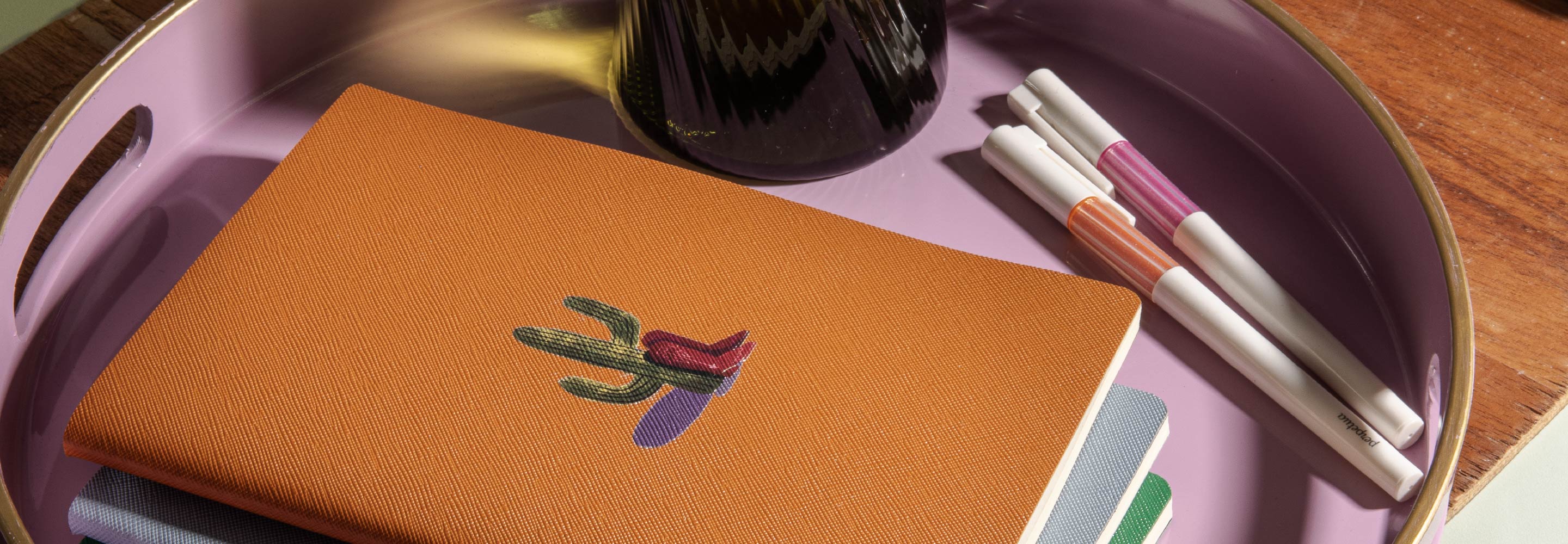
For these moments, it helps to keep your notebook close, not in a drawer at home. The Mini Pocket Journal measures 9.5 × 14.5 cm and has 192 pages, so it fits in your bag and is there when your mind speeds up on the subway, at the office or in a waiting room. If you want to learn more about the practice in general, start with what journaling is.
Frequently asked questions
Does journaling cure anxiety? No. Journaling can help you sort out what you feel and ease the intensity of a bad moment a little, but it isn't a treatment. If anxiety is frequent or intense, reach out to a mental health professional.
What do I write if I'm very anxious and the words won't come? Start with the simplest thing: “right now I feel…” or the five-things-you-see exercise. You don't need full sentences. Single words count too.
Do I have to reread what I wrote? No. Some people reread to notice patterns; others prefer not to go back to those pages. Both are valid, and you can switch depending on what you need.
Leave a comment
This site is protected by hCaptcha and the hCaptcha Privacy Policy and Terms of Service apply.