








You open your notes app to write about how your day went. You're two lines in when a message comes in, then a notification about a photo, then a work email. 10 minutes later, the note is still two lines long and you're watching recipe videos.
For journaling, writing by hand usually works better than writing on your phone because it's slower, has no distractions and makes you finish each idea before moving on to the next. Your phone is useful for jotting things down quickly and searching for them later; paper is for thinking, feeling and getting to know yourself. They don't compete: they're for different things.
The difference isn't the tool, it's the pace
On our phones we write the way we text: fast, choppy, correcting as we go. It's useful for remembering a house number or the grocery list. But when what you want is to understand what's going on with you, that speed gets in the way.
Writing by hand is slower than thinking. And that, which seems like a disadvantage, is exactly what helps. While your hand catches up with your head, you have a few seconds to choose the word, to notice that what you were about to write wasn't entirely true, to follow the idea all the way through. It's not just writing, it's thinking calmly.
What paper has that your phone doesn't
This doesn't come from a study, it comes from the practice of many people who write every day. These are the differences that stand out most:
- There are no notifications. A notebook doesn't interrupt you. While you write, it's the only thing happening.
- You can't completely erase. You can cross things out, but what's crossed out is still there. Over time, seeing what you corrected also says something about you.
- Your handwriting tells things. When you're tired, angry or happy, it shows in how you write. On a screen, everything looks the same.
- It's yours and no one else's. There's no cloud, password or automatic backup. The notebook is on your nightstand and that's where it stays.
- You can leaf through it. Opening a notebook to any page and finding what you were thinking six months ago is very different from searching a list of notes.
- It keeps your hands busy. For many people, the act of writing is already a pause: coffee on the side, the pen, the sound of paper.
What your phone does better (and that's okay)
Being honest about paper also means recognizing what it doesn't do. Your phone wins at a few things:
- Speed. If something occurs to you on the subway, jotting it down on your phone is more practical.
- Search. Finding a note by keyword is easier than flipping through three notebooks.
- Practical stuff. Addresses, passwords, lists you share with other people.
It's not about giving up your phone. It's about not using it for everything. Many people do both: they jot down on their phone what they don't want to forget and, at night, move to the notebook what they want to think through calmly.
When it makes sense to write by hand
Writing by hand makes the most sense when what you're after isn't storing a piece of information, but understanding something. For example:
- When you want to process a heavy day or an emotion you can't quite name yet.
- When you're making a decision and need to look at the pros and cons calmly.
- When you write down goals and want to come back to them.
- When you answer questions about yourself, like journaling prompts.
- When you want to keep something to reread years from now.
In all those cases, paper isn't nostalgia. It's the tool best suited to going slowly.
How to start if you've been writing only on your phone for years
If you're no longer used to writing by hand, the first few days will feel strange. Your hand gets tired, your handwriting doesn't look like it used to, and the temptation to go back to your phone is right there. Some ways to make it easier:
- Start small. Five minutes a day, one page or less.
- Leave your phone in another room while you write, or at least face down and on silent.
- Choose a pen you like. It seems like a small detail, but you'll notice it.
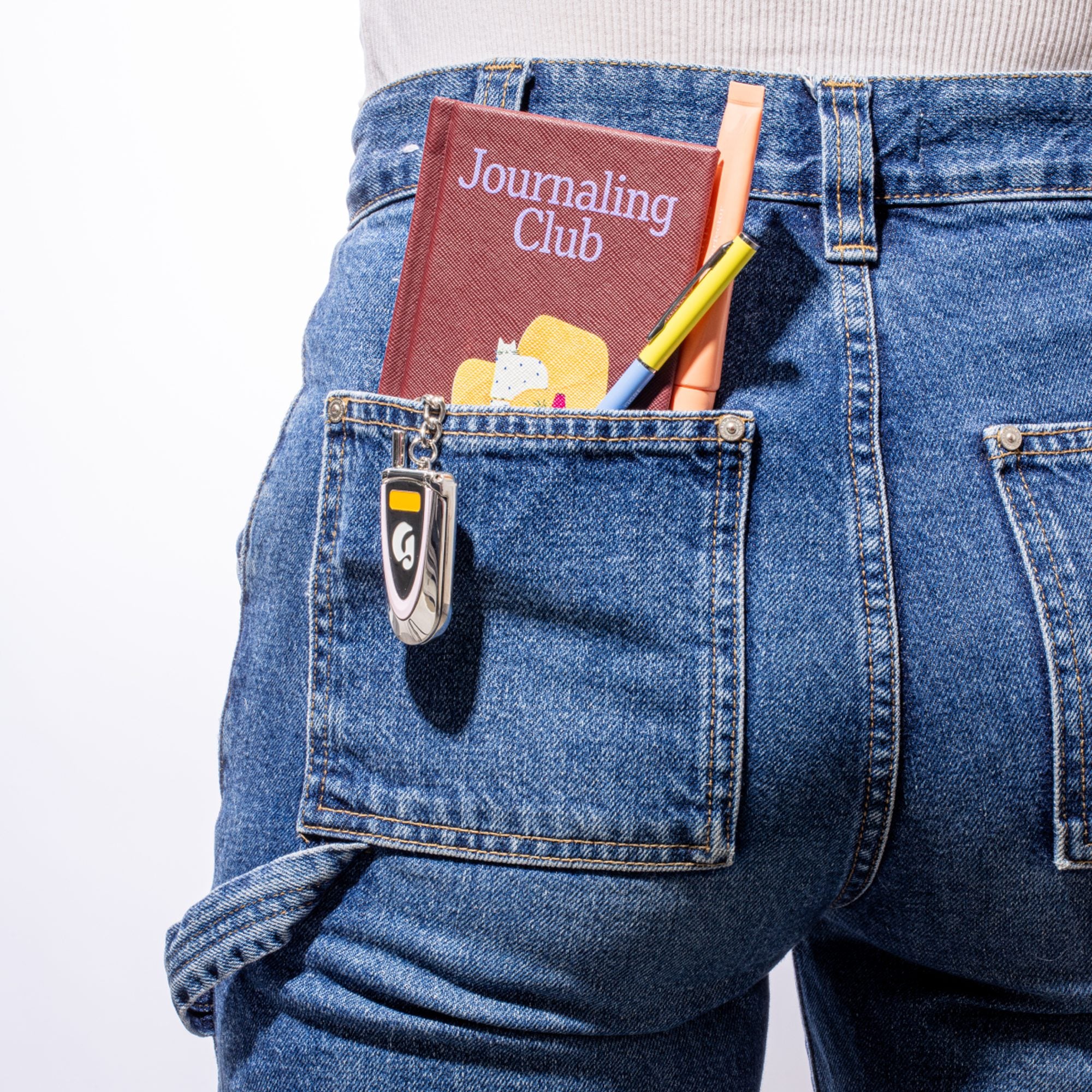
- Keep the notebook in sight, where you used to grab your phone: on your nightstand, next to your coffee, on the dining table.
Your handwriting comes back within a few days. What takes a little longer is getting used to not being in a hurry... and that's exactly the part that's most worth it.
A notebook that makes you want to open it
For paper to compete with your phone, it helps if opening the notebook is easy and pleasant. That it's within reach, that the paper feels good and that the notebook stays open on its own while you write.
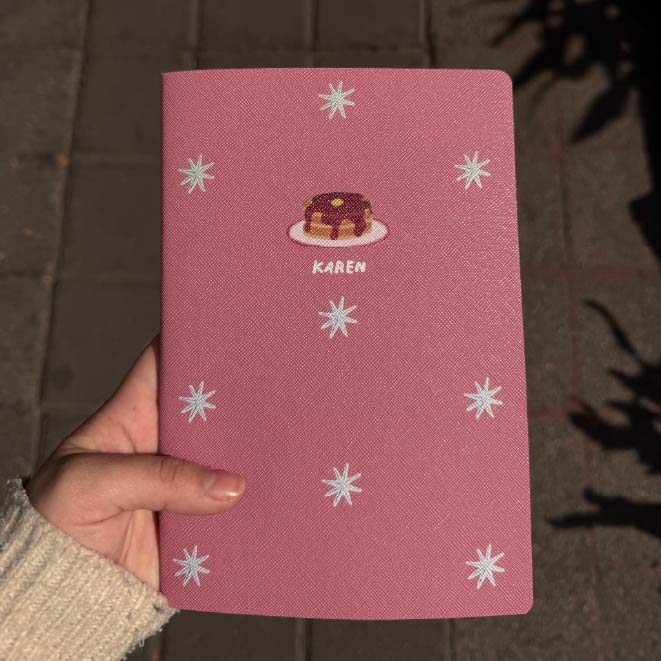
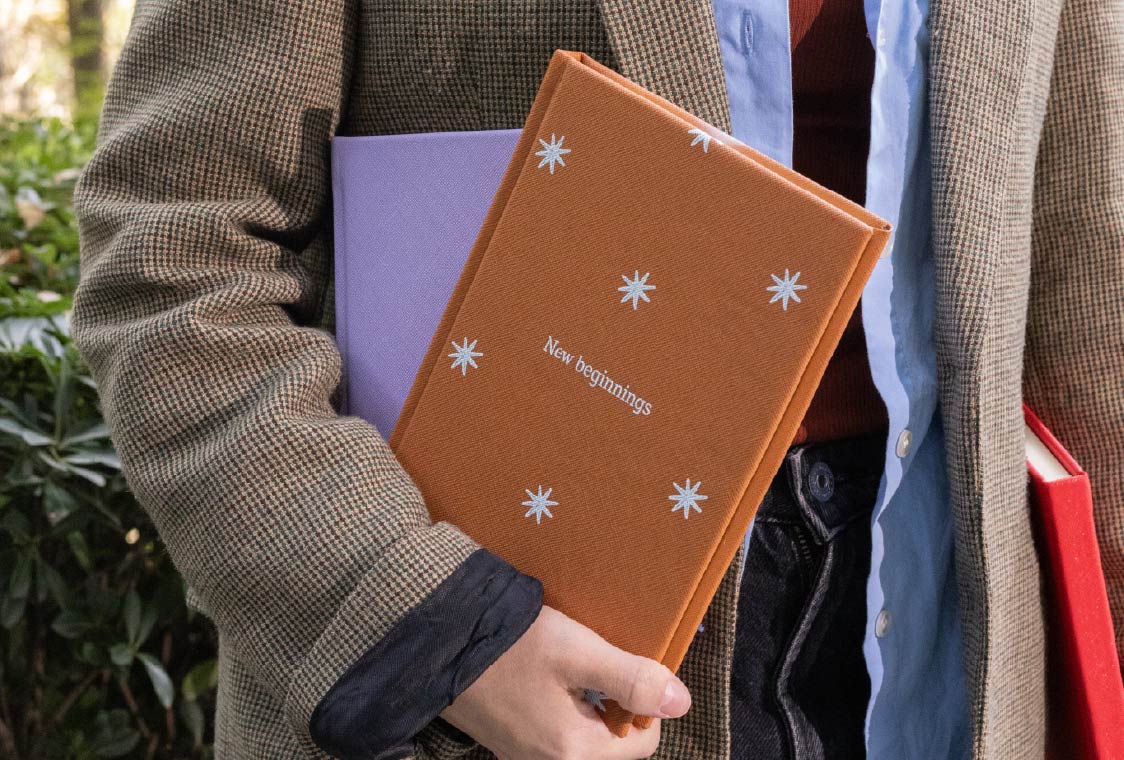
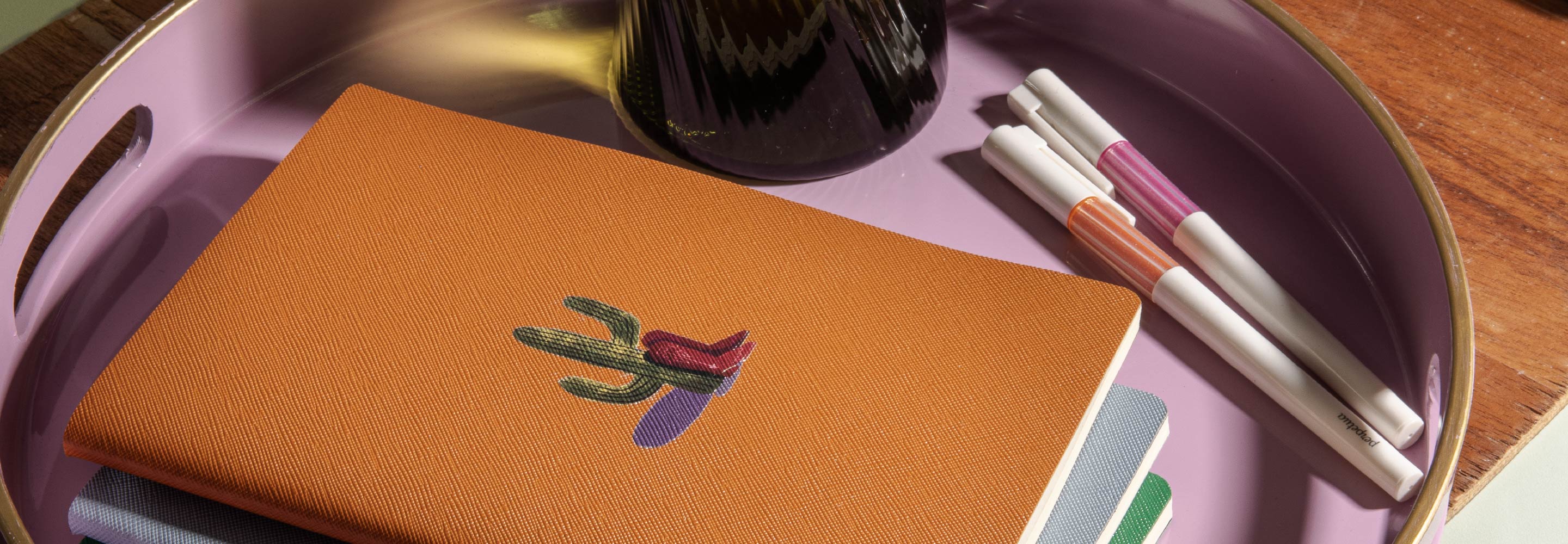
The Hardcover Notebook has 192 pages of 90 g cream bond paper, a sewn binding that lays flat and a ribbon bookmark, so you always know where you left off. You can personalize it with your name or a phrase, which turns it into something of yours, not just another object on your desk. In a world of screens, it's a pause that fits on your nightstand.
Frequently asked questions
Is it better to keep a journal by hand or on your phone?
For journaling, writing by hand usually works better because it's slower and has no distractions. Your phone is for jotting things down quickly; paper is for thinking calmly.
Does writing by hand help you focus?
For many people, yes, because there are no notifications or other apps nearby. A notebook is only for writing, and that helps keep your attention on what you're thinking.
Can I combine my phone and a notebook?
Yes. A practical way is to jot down on your phone what you don't want to forget during the day and, at night, move to the notebook what you want to think about or keep.
Leave a comment
This site is protected by hCaptcha and the hCaptcha Privacy Policy and Terms of Service apply.